How EMS Supports Muscle Endurance and Performance
20 August, 2026
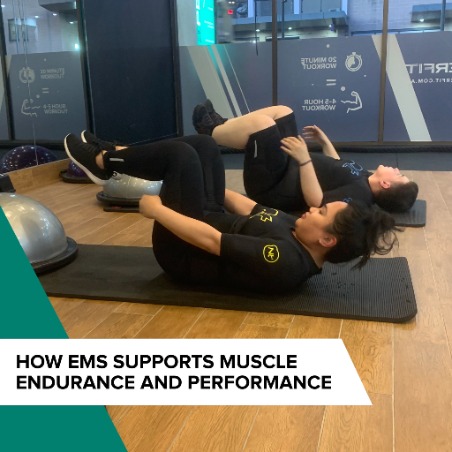
Maintaining muscle strength and endurance can be challenging, especially for people balancing work, travel, or periods of recovery. EMS for muscles offer a way to complement traditional exercise by delivering controlled electrical impulses directly to the muscles. Let’s take a closer look at how EMS for muscle stimulation works and where it may fit into your fitness routine.
The Difference Between Muscle Strength and Muscle Endurance
If you’ve been training for a while, you’re probably familiar with the term muscle strength and muscle endurance. But what is the difference between the two?
Muscles contain different types of muscle fibres, primarily fast-twitch and slow-twitch fibres. Fast-twitch fibres are important for explosive power and high-intensity movements, while slow-twitch fibres support endurance and sustained activities.
Muscle strength refers to the amount of force a muscle can produce in a single effort. For example, lifting a heavy weight requires a high level of muscle strength.
Muscle endurance, on the other hand, refers to how long a muscle can continue producing force or performing repeated contractions before becoming fatigued. Activities such as running rely heavily on muscle endurance.
EMS for muscles can complement training by supporting neuromuscular coordination, helping muscles contract efficiently and work in sync with other muscle groups. This may help reduce fatigue during workouts and support performance in both strength and endurance-based activities.
How EMS Improves Muscle Endurance
Muscle endurance is the ability of your muscles to continue working over time without becoming excessively fatigued. Activities such as running, performing repeated squats, or cycling for an extended period rely on muscle endurance.
EMS muscle stimulation can help engage slow-twitch muscle fibres, which play an important role in sustained, endurance-based activities. This may complement your training and support improvements in muscular endurance and overall physical performance.
However, combining EMS muscle training with regular endurance activities such as running, swimming, and cycling is important for developing well-rounded endurance and fitness.
How EMS Enhances Athletic Performance
Athletes need a combination of strength, power, endurance, coordination, mobility, and sport specific skills to perform at their best.
Electrical Muscle Stimulation training can help athletes improve their muscle strength and physical performance. A 2016 study of elite soccer players, published in the Journal of Sports Science and Medicine, found that a 14-week program of whole-body Functional EMS training significantly enhanced players’ leg strength, sprinting and vertical jumping performance compared to those who underwent a jump training program without Functional EMS.
Source: Effects of a Whole-Body Electrostimulation Program on Strength, Sprinting, Jumping, and Kicking Capacity in Elite Soccer Players by Filipovic, A; Grau, M; Kleinöder, H; Zimmer, P; Hollmann, W; & Bloch, W; 2016.
However, EMS muscle training cannot replace sport-specific practice. A runner still needs to run, and a tennis player still needs to practice tennis-specific movements.
The most effective approach is generally to combine EMS with training that directly aligns with your individual performance goals.
Benefits of EMS for Different Fitness Levels
Electrical Muscle Stimulation or EMS muscle training is a versatile approach that can be adapted to different fitness levels and training goals.
For people who are new to exercise, EMS training can be particularly beneficial when performed under the guidance of a qualified professional. The structured nature of EMS sessions can make training feel more accessible and easier to incorporate into a regular routine.
For people who exercise regularly, EMS muscle stimulation can add an additional challenge to their existing workouts routine and may support improvements in muscle strength and physical performance. It can also be an appealing option for people with busy schedules who are looking for a time-efficient approach to training.
For experienced athletes, EMS for muscles can be used as a supplementary training method alongside strength, endurance, and sport-specific training. EMS muscle therapy may also be used as part of a recovery routine with some approaches focusing on supporting circulation and recovery following exercise.
Regardless of fitness level, EMS for muscle stimulation should be performed under the supervision of a qualified professional, with sufficient time between sessions to allow the muscles to recover.
Can EMS Help Build Lean Muscle?
One of the most common questions about EMS for muscles is whether it can help build lean muscle mass. To answer this question, it’s important to understand that building lean muscle mass generally requires a combination of resistance training, proper nutrition, adequate protein intake, sufficient recovery and progressive overload.
EMS for muscle stimulation works by activating muscle fibres through controlled electrical impulses. This can complement voluntary muscle contractions and contribute to strength adaptations and muscle development.
For the best results, EMS for muscles should be used alongside progressive resistance training, adequate protein intake, regular physical activity, quality sleep and proper recovery. Combining these elements can help create a well-rounded approach to building and maintaining lean muscle mass.
EMS and Injury Prevention
Electrical Muscle Stimulation was once mainly associated with rehabilitation and physical therapy. Today, EMS muscle therapy is also used as a low-impact approach to exercise that can support muscle strength and conditioning. By strengthening the muscles surrounding key joints, EMS may help support joint stability and contribute to overall movement and physical function.
Improving muscle strength can play an important role in injury prevention. EMS for muscle stimulation may complement strength training by helping activate and strengthen targeted muscle groups, which can support better muscular control and stability.
It’s also important to note that many EMS workouts incorporate bodyweight exercises, which can reduce the need for additional external loads.
How Often Should You Use EMS for Endurance?
With EMS, just like with traditional training, there is no one-size-fits-all approach. If you’re new to EMS training, it is generally recommended to start gradually and increase the frequency over time.
One EMS session per week can be a suitable starting point for beginners. After 4 to 8 weeks, you may be able to increase to two sessions per week, provided you allow sufficient time for muscle recovery between sessions.
It’s also important to consider your other physical activities and training commitments when planning your EMS sessions. A qualified personal trainer can help you determine an appropriate training frequency based on your fitness level, goals, and overall activity level.
Combining EMS with a Healthy Lifestyle
Electrical Muscle Stimulation works best when it is incorporated into a healthy, active lifestyle.
When it comes to becoming a healthier version of yourself, the solution is rarely just about training. Whether you choose EMS muscle training, or traditional gym workouts, or a combination of both, it is important to consider all aspects of your lifestyle.
Quality sleep plays an important role in muscle recovery and adaptation.
A balanced diet provides the protein, carbohydrates, vitamins, minerals, and other nutrients your body needs to support training and recovery. Staying adequately hydrated also supports normal bodily functions and helps replace fluids and electrolytes lost through exercise.
Finally, rest and recovery are just as important as training itself. More training is not always better. Giving your muscles enough time to recover between sessions allows your body to adapt to training and supports long-term performance and muscle development.
FAQs
How does EMS improve muscle endurance?
EMS muscle stimulation uses controlled electrical impulses to activate muscle fibres, including both slow- and fast-twitch fibres. By stimulating these muscle fibres, EMS may complement traditional endurance training and support improvements in muscular endurance.
Can EMS increase athletic performance?
Yes. Research suggests that regular EMS training, when combined with an athlete’s existing training program, may have beneficial effects on muscle strength and power.
Does EMS help muscles recover faster?
EMS may support muscle recovery by promoting circulation and can be used as part of a post-workout recovery routine. However, recovery depends on a range of factors, including quality sleep, balanced nutrition, adequate hydration, and sufficient rest between training sessions.
Is EMS effective for beginners?
Yes. Electrical Muscle Stimulation (EMS) can be a beginner-friendly training option when performed under the guidance of a qualified professional. A typical EMS session can be relatively short, making it a convenient option for beginners who may find it easier to fit into their schedules.
The intensity of the electrical stimulation and the exercises can also be adjusted to suit an individual’s needs, fitness level, and training experience. This allows beginners to start at a comfortable level and gradually progress as they become more familiar with EMS training.
How many EMS sessions are recommended each week?
As a general guideline, EMS training can be performed once or twice a week, with sufficient recovery time between sessions. Allowing up to 48 hours between EMS muscle training sessions can give your muscles time to recover and adapt to the training stimulus.
Can EMS replace weight training?
Generally, EMS should not be considered a complete replacement for conventional weight training. However, for people with busy schedules, EMS can be a convenient alternative to doing no exercise at all.
Where possible, we recommend using EMS as a complement to a well-rounded exercise program that includes strength training, cardiovascular exercise, mobility, and other forms of physical activity. Combining different training methods can help support a more balanced approach to overall fitness.
How long does it take to see results with EMS?
It’s common for clients to experience delayed-onset muscle soreness (DOMS) within 24 to 48 hours after their first EMS session, particularly if they are new to this type of training.
Results can vary from person to person depending on factors such as training frequency, fitness level, nutrition, and overall lifestyle. With consistent training, some clients may begin to notice visible changes within 4 to 6 weeks.
Whether your goal is to build muscle strength, improve your endurance, or support your recovery from an injury, EMS can complement your training and help you work towards your fitness goals. Book your free introductory session by calling us on 1300 20 20 73.