How Proper Exercise Form Influences Muscle Recruitment During EMS Workouts
16 November, 2026

Muscle activation is a common term in the fitness industry. Every exercise target specific muscle group, and how effectively those muscles are engaged depends on your exercise technique and form.
So, how does proper exercise form influence muscle recruitment?
In this blog, we’ll explore the connection between exercise form and muscle recruitment, and why it matters during EMS training.
Understanding the Connection Between Exercise Form and Muscle Recruitment During EMS Training
When people first try Electrical Muscle Stimulation (EMS) training, they often focus on the suit and the electrical impulses. But there is another important part of the workout that deserves just as much attention: how you move.
EMS for muscles combines electrical stimulation with physical exercise. While the impulses stimulate muscle contractions, you still perform exercises such as squats, lunges, upper-body movements and core exercises. The way you perform these movements can influence how different muscles contribute to the exercise.
This is why proper technique matters during an EMS muscle workout. Good exercise form helps you maintain control, achieve appropriate body alignment and focus on the muscles you want to train.
At 20PerFit, we believe effective EMS training is about more than simply increasing the intensity. It is about combining stimulation, movement and professional guidance to make each session count.
How Body Alignment and Posture Affect Muscle Activation During EMS Workouts
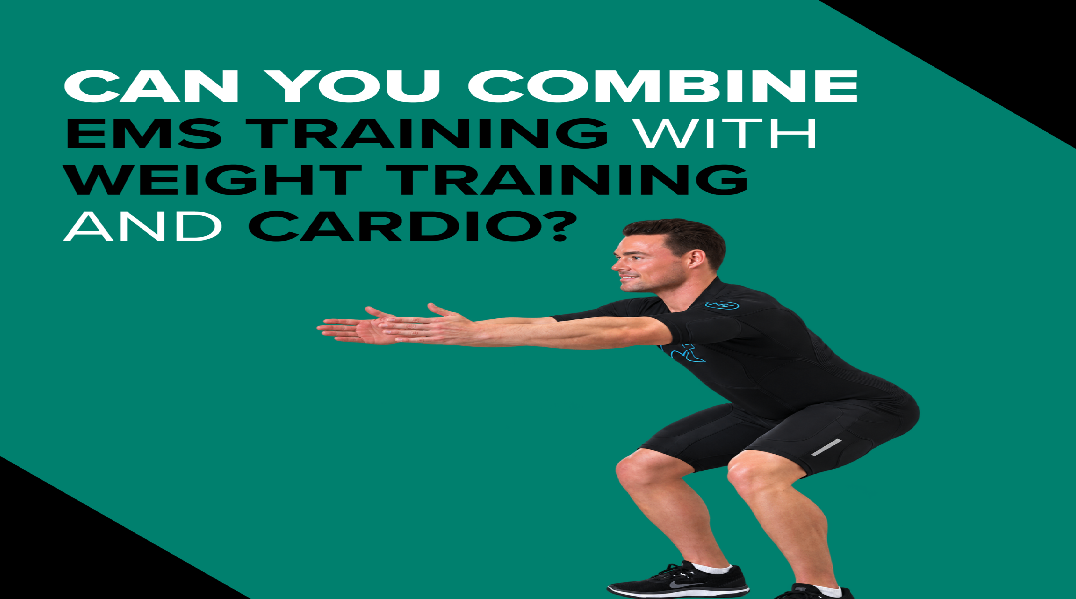
Think about performing a squat. If your weight shifts too far forward, your knees collapse inward or your back position changes significantly, the movement may become less controlled. You might still complete the squat, but you are no longer performing it as effectively as you could, and you could increase your risk of injury.
The same principle applies to EMS training. Although EMS workouts can be performed with lower external loads than traditional weightlifting, proper technique is still essential for safe and effective exercise.
Body alignment influences how forces are distributed across your muscles and joints. Maintaining a stable position helps you perform exercises with better control and allows the muscles involved in the movement to work as intended.
During an EMS muscle strengthening session, your trainer may ask you to adjust your foot position, straighten your back, relax your shoulders or slightly change the position of your hips. These small corrections can make a noticeable difference to the quality of the movement.
For example, during an EMS squat, keeping your feet firmly grounded, your knees tracking in line with your toes and your torso controlled helps you perform the movement with greater consistency.
The takeaway: Proper alignment provides a solid foundation for movement, allowing you to focus on the exercise rather than compensating for poor positioning.
The Role of Controlled Movements in Achieving Effective Muscle Contractions with EMS
One common misconception about EMS for muscles is that the electrical stimulation does all the work for you.
In reality, the exercise component is just as important.
During EMS training, you wear a suit fitted with electrodes that deliver electrical impulses to stimulate your muscles. At the same time, you perform a series of exercises. This combination creates a different training experience compared to conventional exercise alone. However, rushing through repetitions or relying on momentum can make it harder to maintain proper technique.
Controlled movements help you achieve more precise muscle activation and ensure that each exercise is performed safely and correctly. They also make it easier to maintain a consistent range of motion throughout each movement.
Imagine performing a lunge. Dropping quickly into the movement and pushing back up without control can make it difficult to maintain balance and proper alignment. Moving at a steady pace gives you more opportunity to control your knee position, stabilise your hips, maintain balance and engage the intended muscle groups.
This is particularly important during EMS sessions because the intensity of the electrical stimulation can make movements feel more challenging than expected.
There is no need to rush. Following the pace set by your trainer helps you focus on the quality of each repetition rather than simply trying to complete as many as possible.
Quality over quantity.
How Joint Positioning Influences Muscle Engagement During Electrical Muscle Stimulation
Our bodies are pretty amazing. The way they are designed to give us strength, stability and functionality is remarkable. One important part of our anatomy is our joints, which play a key role in how our muscles work together during exercise.
The position of our hips, knees, shoulders and elbows influences the demands placed on different muscles. Changing our joint positioning can therefore change how an exercise feels and which muscles contribute most to the movement.
For example, during an EMS muscle strengthening squat, the position of our hips and knee influences how our glutes and quadriceps contribute to the movement. Similarly, during an upper-body exercise, our shoulder position can affect how our chest, shoulders and upper back work together.
This does not mean there is one perfect joint position for everyone. Our body proportions, mobility, training experience and individual needs all play a role in determining the most suitable position for each exercise.
A qualified EMS trainer can help you find the right positioning for each movement and make adjustments when needed. These corrections are particularly useful for beginners who may not yet be familiar with the exercises or how their body should move.
The goal is not to force your body into a particular position. It’s about performing each exercise with appropriate alignment, control and comfort.
Electrical muscle stimulation for muscles can feel intense, particularly if you are new to it. When an exercise becomes challenging, it is easy to lose track of your technique.
Here are a few common mistakes to watch for during an EMS muscle workout.
- Moving too quickly
Fast repetitions can make it harder to maintain control and respond to your trainer’s cues. Focus on steady, deliberate movements instead.
- Using momentum
Swinging your arms or bouncing through a movement can reduce your control over the exercise. Try to perform each repetition with intention rather than relying on momentum.
- Holding unnecessary tension
Some people respond to the stimulation by tensing their entire body. However, unnecessary tension can interfere with smooth movement and make it harder to maintain a relaxed breathing pattern.
- Ignoring body alignment
Allowing your knees to collapse inward, your shoulders to rise towards your ears or your back to move out of a comfortable position can affect exercise technique. Your trainer can help you identify and correct these habits.
- Trying to push through discomfort
An intense muscle contraction is not the same as sharp pain, joint pain or feeling unwell. If something feels wrong, tell your trainer immediately so the exercise or stimulation can be adjusted.
- Setting the EMS intensity too high
It can be tempting to want the stimulation intensity turned up as high as possible, especially when you are trying to challenge yourself. However, if the intensity is too high, it can become difficult to maintain control over your body movements and perform exercises with proper technique. EMS intensity should always be adjusted to your individual ability and comfort level, with guidance from your trainer.
Remember, a good EMS workout isn’t about pushing yourself to the maximum intensity. It’s about finding the right balance between electrical stimulation, controlled movement and proper exercise technique.
Why Proper Breathing and Core Engagement Matter During EMS Strength Training
Whether you’re exercising at the gym or doing an EMS workout, you’ll often hear your trainer emphasize the importance of breathing.
Breathing is easy to overlook when you’re concentrating on an unfamiliar exercise or getting used to EMS stimulation. However, your breathing pattern and core control are important parts of effective strength training.
Your core muscles help stabilise your trunk during movements such as squats, lunges and standing exercises. Coordinating your breathing with movement can help you maintain this stability without creating unnecessary tension.
As a general guide, you should breathe in during the easier or lowering phase of an exercise and breathe out during the more demanding phase. For example, during a squat, you can breathe in as you lower your body and breathe out as you return to standing.
Try to avoid holding your breath throughout the movement. Breath-holding can increase pressure within your torso and may make an already challenging exercise feel more difficult.
Core engagement also does not mean sucking your stomach in as hard as possible. Instead, think about keeping your trunk stable while continuing to breathe naturally.
During an EMS muscle strengthening session, the electrical stimulation may make your abdominal and other core muscles feel particularly active. Maintaining controlled breathing and good posture helps you stay in control of your movements and perform each exercise effectively.
How Exercise Range of Motion Influences Muscle Recruitment During EMS Sessions
Muscle activation during exercise depends on several factors, as we’ve discussed throughout this blog.
From correct breathing and body alignment to proper exercise technique, each element plays a role.
However, there is another important factor that influences muscle recruitment during EMS session: Range of motion.
Range of motion refers to how far a joint moves during an exercise.
For example, a squat performed through a comfortable, controlled range will look different from a shallow squat. Neither depth nor range should be forced simply to make an exercise appear more challenging.
The appropriate range of motion depends on the exercise, your mobility, your training experience and your individual circumstances.
During an EMS muscle workout, using a suitable range of motion helps you perform the movement consistently while maintaining control over your joints and posture.
If you are new to exercise, your trainer might begin with a smaller range and gradually progress as your technique improves. Someone with more training experience may be able to work through a greater range, provided they can maintain good form.
It is also worth remembering that a bigger movement is not automatically a better movement. Forcing a joint beyond a comfortable range can compromise technique and increase discomfort.
Your trainer should help you find a range that suits your current ability and the purpose of each exercise.
Remember: It’s not about how far you can move, but how well you can control the movement.
Adapting Exercise Techniques to Target Specific Muscle Groups with EMS
One of the useful aspects of EMS for muscles is that the exercises can be adapted to suit different goals and abilities.
For example, a session may include squats and lunges to challenge the lower body, controlled arm movements for the upper body, and stability exercises that involve the core.
The exercise itself influences which muscles contribute to the movement. Electrical stimulation adds another layer by stimulating the muscles through the EMS suit.
However, changing an exercise does not guarantee that a particular muscle will become more active. Muscle recruitment depends on several factors, including the movement, joint position, individual biomechanics, stimulation settings and training experience.
This is why an EMS session should not be a one-size-fits-all workout.
A beginner may need simpler movements and more time to become comfortable with the stimulation. Someone with more experience may be ready for more demanding variations, provided their technique remains consistent.
For people returning to exercise after a break, exercise selection can also be adjusted to suit their current ability.
The aim is to choose exercises that suit the individual, rather than trying to make every session as difficult as possible.
The Importance of Trainer Guidance and Real-Time Technique Corrections During EMS Workouts
Having a trainer guide your session is particularly valuable when you are learning Electrical muscle stimulation for muscles.
Unlike a conventional workout where you may be familiar with the equipment and movements, EMS introduces an additional sensation that takes time to get used to. It can be tempting to focus entirely on how strong the contractions feel and forget about the exercise itself.
A trainer helps bring your attention back to the movement.
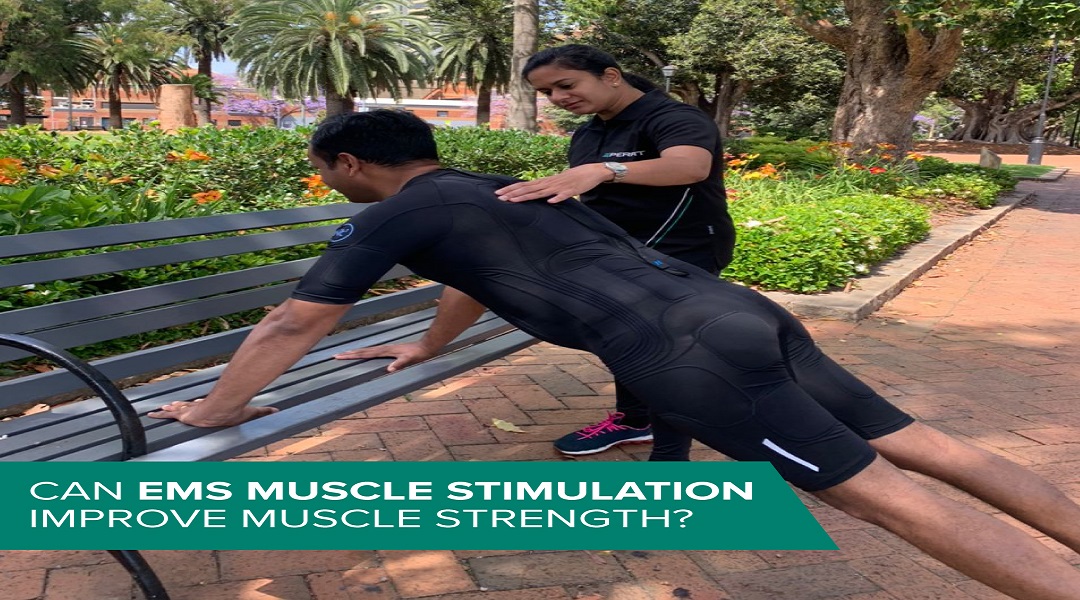
They can observe your posture, correct your positioning, adjust an exercise and monitor how you respond to the stimulation. They can also help determine whether you need to reduce the difficulty or change the movement to maintain good technique.
For example, if your shoulders start lifting during an upper-body exercise, your trainer may ask you to relax them and adjust your arm position. If you struggle to maintain balance during a lunge, they may modify the movement before progressing further.
These real-time corrections help make the workout more individualised.
They are also important for managing intensity. Stronger stimulation is not automatically better, and increasing the intensity should never come at the expense of movement quality or comfort.
At 20PerFit, EMS sessions are trainer-guided, allowing the exercises and stimulation to be adjusted to the individual rather than expecting everyone to follow the same approach.
How to Maintain Proper Exercise Form as EMS Workout Intensity Increases
As you become more comfortable with EMS training, you may find that you can manage more challenging exercises or higher stimulation levels.
The important thing is to progress gradually.
When intensity increases, pay attention to whether you can still maintain your posture, control your movements and follow your trainer’s instructions. If your technique begins to deteriorate, that is a sign to adjust the exercise or reduce the intensity.
Here are five practical tips to keep in mind:
Start with the basics. Learn the movement before progressing to more demanding variations.
Focus on control. Smooth, consistent repetitions are more useful than rushing through an exercise.
Keep communicating. Tell your trainer if the stimulation feels too strong or if you experience pain, dizziness or unusual discomfort.
Allow time for recovery. EMS training can place substantial demands on your muscles, particularly when you are starting out. To allow your muscles sufficient time to recover between sessions, we recommend leaving at least 48 hours between EMS workouts.
Progress at your own pace. Your training should reflect your current ability, not someone else’s fitness level.
A good EMS muscle workout should challenge you while allowing you to maintain control. The aim is to build strength and improve your exercise capacity over time, not to reach the highest possible intensity in every workout.
Getting More Out of EMS for Muscles
EMS training offers a different way to approach strength training by combining electrical stimulation with physical exercise. But the technology is only one part of the equation.
Your posture, joint positioning, breathing, range of motion and movement control all influence how you perform the exercises. When these elements are combined with suitable stimulation settings and professional guidance, they help create a more structured and individualised workout.
If you are new to EMS muscle strengthening, do not worry about getting every movement right straight away. Learning good technique takes practice, and your trainer should help you build confidence as you progress.
The most effective approach is to focus on consistent, controlled movement, listen to your body and allow your training to develop over time.
At 20PerFit, we combine trainer-guided exercise with EMS technology to help make strength training more accessible for busy Australians.
With sessions lasting just 20 minutes, you can fit a structured workout into a busy schedule without spending hours at the gym.
Ready to experience EMS training for yourself?
Book a trial session with 20PerFit and discover how trainer-guided EMS workouts can fit into your fitness routine.
Call 1300 202 073 to get started.