Can Electrical Muscle Stimulation Improve Muscle Strength?
24 September, 2026
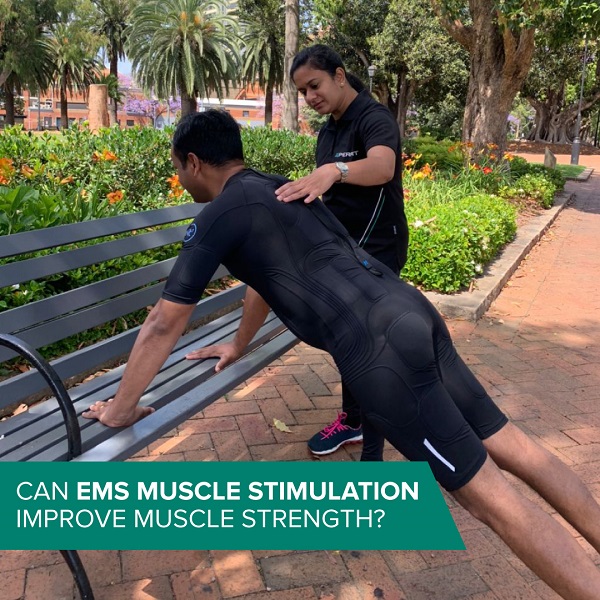
If you’ve been looking into ways to get stronger, you’ve probably come across EMS. EMS for muscles is often advertised as a faster or easier way to train your muscles, which naturally raise the question: does EMS actually make you stronger?
EMS, or Electrical Muscle Stimulation, uses low-frequency electrical impulses to make your muscles contract. Normally, this signal comes from your brain, which tells your muscles to contract. EMS helps trigger that contraction externally.
The idea behind EMS is not new. It has been used for years by physiotherapists for rehabilitation and by athletes as part of their training.
Let’s explore how EMS for muscle stimulation works, who may benefit from it, and what can you expect from EMS muscle training when it comes to building muscle strength.
Can EMS Really Improve Muscle Strength?
The short answer is yes. Research has shown that Electrical muscle stimulation can improve muscle strength when used correctly and at the appropriate intensity.
EMS works by sending electrical impulses through electrodes placed over specific muscle groups, causing the muscles to contract. This stimulation can activate a large proportion of muscle fibres, and repeated contractions may help improve muscle strength over time.
However, EMS works best when it is used under the guidance of a specialised trainer who can adjust the intensity, training frequency, and electrode placement to suit your goals and fitness level.
It’s also important to keep in mind that results can vary depending on whether you use EMS on its own or alongside regular exercise.
Benefits of EMS Muscle Stimulation for Strength
EMS muscle stimulation offers several potential benefits, with one of the main advantages being targeted muscle activation. EMS can stimulate muscles through electrical impulses, which may be useful when you’re trying to target and activate specific muscle groups that can be difficult to engage with regular exercise alone
EMS muscle therapy can also be an alternative for people who are unable to lift heavy weights. EMS provides a way to stimulate muscle contractions without relying solely on heavy external resistance. This can be particularly relevant during rehabilitation or for people experiencing back, knee or shoulder pain or weakness, under appropriate professional guidance.
Another advantage of EMS muscle training is that it can be time-efficient, with each session lasting 20 minutes. For people with busy schedules, shorter training sessions may provide a convenient alternative to a more traditional exercise routine and help reduce a sedentary lifestyle.
Who Can Benefit from EMS Muscle Stimulation?
EMS for muscles can be a beneficial training option for a range of people. Some are interested in Electrical muscle stimulation because they want to add something different to their existing workouts, while others use it as part of a rehabilitation program.
People who may benefit from EMS muscle stimulation include those with limited mobility, older adults, and people who are short on time. It can offer a convenient way to stimulate muscles when traditional exercise may be difficult or less practical.
The key is to choose EMS for the right reasons and understand its limitations rather than viewing it as a miracle solution. When used appropriately, EMS can be a useful addition to a well-rounded training or rehabilitation program.
EMS vs Traditional Strength Training
This is probably where most people get confused. If EMS makes your muscles contract, does that mean it’s the same as lifting weights? Not quite.
EMS muscle stimulation can be a convenient training option for people who don’t have the time to go to the gym and lift weights. However, if you do have the time, combining EMS with traditional strength training may provide the best overall results.
Put simply, EMS uses electrical impulses to trigger involuntary muscle contractions and can be used to target specific muscle groups. Traditional strength training, on the other hand, relies on voluntary muscle contractions as you move against resistance.
In the case of an injury, EMS may be used as a low-impact option during rehabilitation, depending on the injury and under appropriate professional guidance. Traditional strength training is widely used to build strength and overall fitness, but lifting heavy weights may not be suitable when an injury is present.
EMS doesn’t have to compete with traditional training. In many cases, the two can work together, with EMS complementing a well-rounded strength training routine.
Factors That Influence EMS Results
Just like with regular training, there are many factors that can affect your results. That’s because results are not determined by the training or Electrical Muscle Stimulation technology alone.
One factor that can influence your results are the intensity of the stimulation. It should be strong enough to produce an effective contraction, but not so high that the client can no longer perform or control their movements comfortably.
With Electrical Muscle Stimulation, consistency also matters. Following a regular program is essential for achieving and maintaining results over time.
Your starting point matters too. Someone who is new to exercise may notice changes differently from someone who has been strength training for years. Your age, fitness level and overall health can all influence how you respond to EMS training.
Lastly, your diet, protein intake, sleep and recovery all play an important role. EMS can be part of your training routine, but these factors are just as important when it comes to supporting muscle development, strength, and overall results.
Common Myths About EMS Muscle Stimulation
EMS for muscles has attracted plenty of attention, and unfortunately, some of the marketing around it can make it sound too good to be true.
Some common claims include: “EMS builds muscle without any effort”, “EMS is better than weight training”, “the stronger the stimulation, the better” and “you’ll see results after one session”.
Here are the facts: EMS can make your muscles contract, but that doesn’t mean you can simply sit still and expect results. Active exercise and a well-structured training program are still important for developing strength and fitness.
EMS and traditional training complement each other. EMS may be a useful alternative when you are short on time or when an injury makes traditional strength training difficult, depending on your individual circumstances. Otherwise, combining EMS with traditional training can provide a more well-rounded approach.
Electical muscle stimulation should feel challenging and produce effective muscle contractions, but the goal is not to tolerate the highest possible intensity. The stimulation should be adjusted to a level that is appropriate for your fitness level, goals, and comfort.
Lastly, you may experience muscle soreness 24 to 48 hours after your first EMS session, particularly if your muscles are not accustomed to the stimulation. However, one session is not enough to develop lasting strength. Consistency and regular training over time are essential for achieving meaningful results.
How Long Does It Take to See Strength Improvements?
There is no specific timeframe, as it depends on all the factors mentioned above. However, some people may notice changes in muscle activation and how an exercise feels relatively quickly. Actual improvements in strength, however, may take several weeks to become noticeable, typically around 4 to 6 weeks if you train consistently.
Is EMS Muscle Stimulation Safe?
Yes, EMS is generally safe, however, it is not suitable for everyone. Certain medical conditions or circumstances may prevent someone from using EMS. For example, people with implanted medical devices or those who are pregnant should not use EMS.
FAQs
Can EMS muscle stimulation increase muscle strength?
Yes. Research suggests that EMS for muscles can improve muscle strength when it is used consistently and appropriately.
How many EMS sessions are needed to see results?
There is no set number of sessions that will work for everyone. The results of EMS muscle training can also depend on factors such as your lifestyle, diet and consistency.
Is EMS more effective than weight training?
Not necessarily. Weight training and EMS work in different ways. Traditional resistance training remains one of the most effective ways to build strength, while EMS can be useful as a complement to conventional training or in situations where traditonal exercise is not practical.
Can EMS help build muscle without going to the gym?
Yes, Electrical Muscle Stimulation can activate your muscles without requiring a traditional gym workout. However, if your goal is to build strength and you have the time, it is ideal to combine EMS with resistance training.
Is EMS muscle stimulation safe for beginners?
Yes. When used correctly, EMS can be safe for beginners. Beginners should start with a lower level of stimulation and limit training to one session per week for the first four weeks. They can gradually increase the frequency to two sessions per week. Working with a qualified trainer is the best approach to ensure you get the most out of each workout.
Does EMS improve muscle endurance as well as strength?
EMS for muscles stimulation can help support both endurance and strength, as EMS targets and activates deep muscle fibres. However, you should still need include appropriate endurance exercises in your routine to develop overall muscular endurance.
Can older adults benefit from EMS muscle stimulation?
Yes. EMS muscle therapy is a low-impact form of exercise, which can make it easier on the joints and suitable for older adults.
How often should you do EMS training for strength gains?
For strength gains, EMS muscle stimulation should be complemented by a balanced, high protein diet. Ideally, you should also include some form of weight training in your weekly routine.
Final Thoughts
EMS for muscles is a useful tool for stimulating muscle contractions and supporting strength development.
It has been used widely in fitness and rehabilitation. Think of EMS as another tool to support your fitness journey rather than simply as a substitute for regular training.
Ready to try it for yourself? Call us on 1300 202073.