How Long Does It Take to See Results with Electric Muscle Stimulation?
19 March, 2026
The Claim That Sounds Like a Lie (But Isn’t)
Twenty minutes. That’s it. That’s the whole workout.
When most people hear that for the first time, their brain immediately files it under “too good to be true.” And honestly? That’s a reasonable reaction. Fitness is full of shortcuts that don’t work, gadgets that collect dust after a week, and marketing claims that fall apart the moment you look at them closely. So scepticism isn’t a flaw here – it’s actually the right starting point.
But here’s where EMS is different from most of the noise: the science behind it isn’t new, and it wasn’t developed in a marketing department. Physiotherapists have been using electric muscle stimulation for decades – long before it became a boutique fitness trend – to help patients rebuild strength after surgeries, strokes, and serious injuries. The underlying mechanism is well understood. What’s changed is simply that the technology has been adapted into a full-body training suit that ordinary people can use.
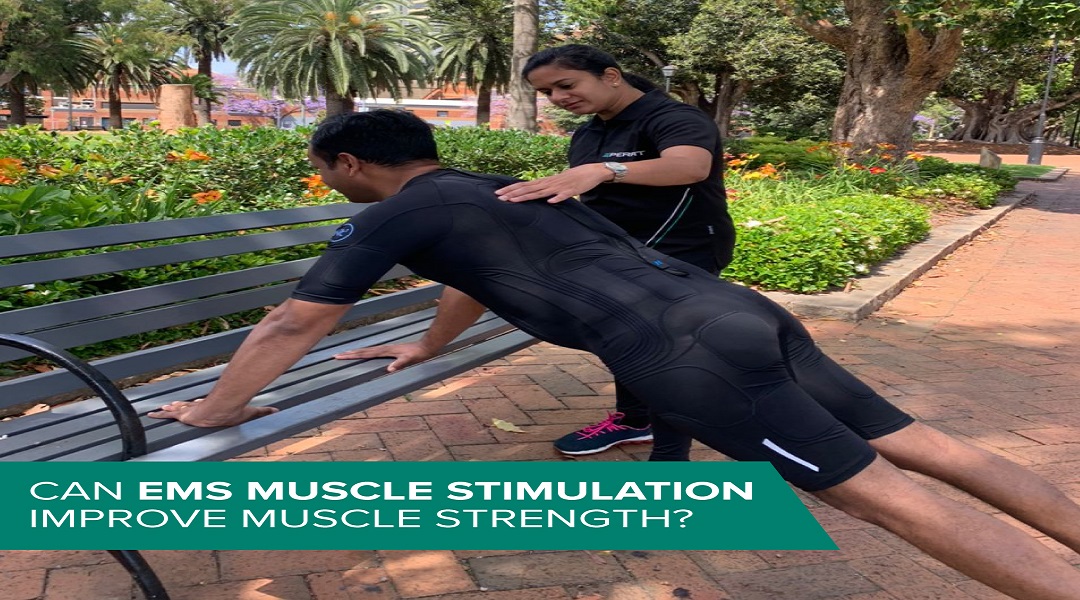
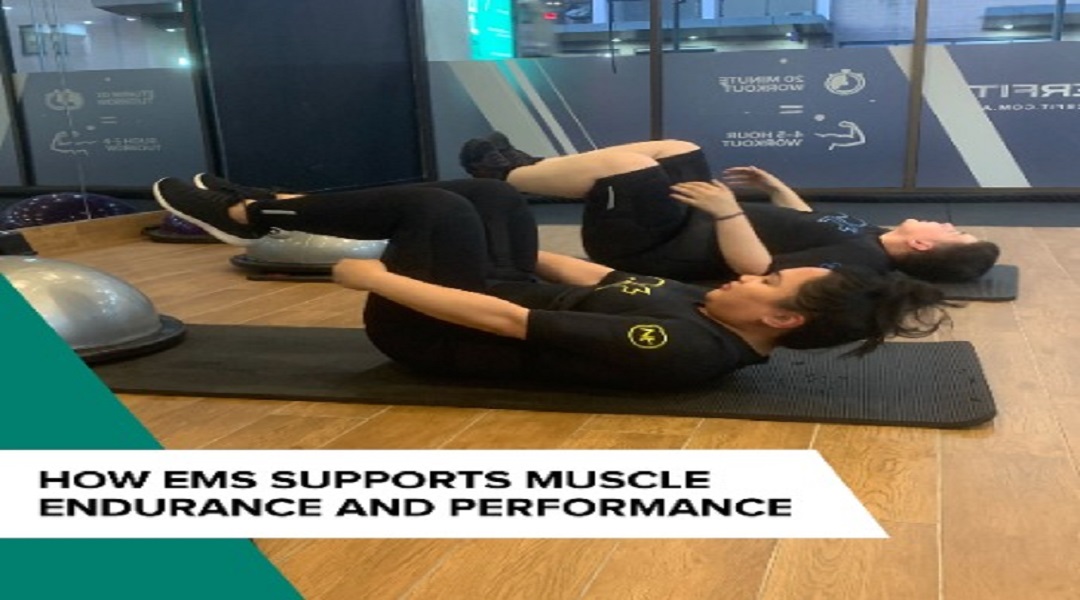
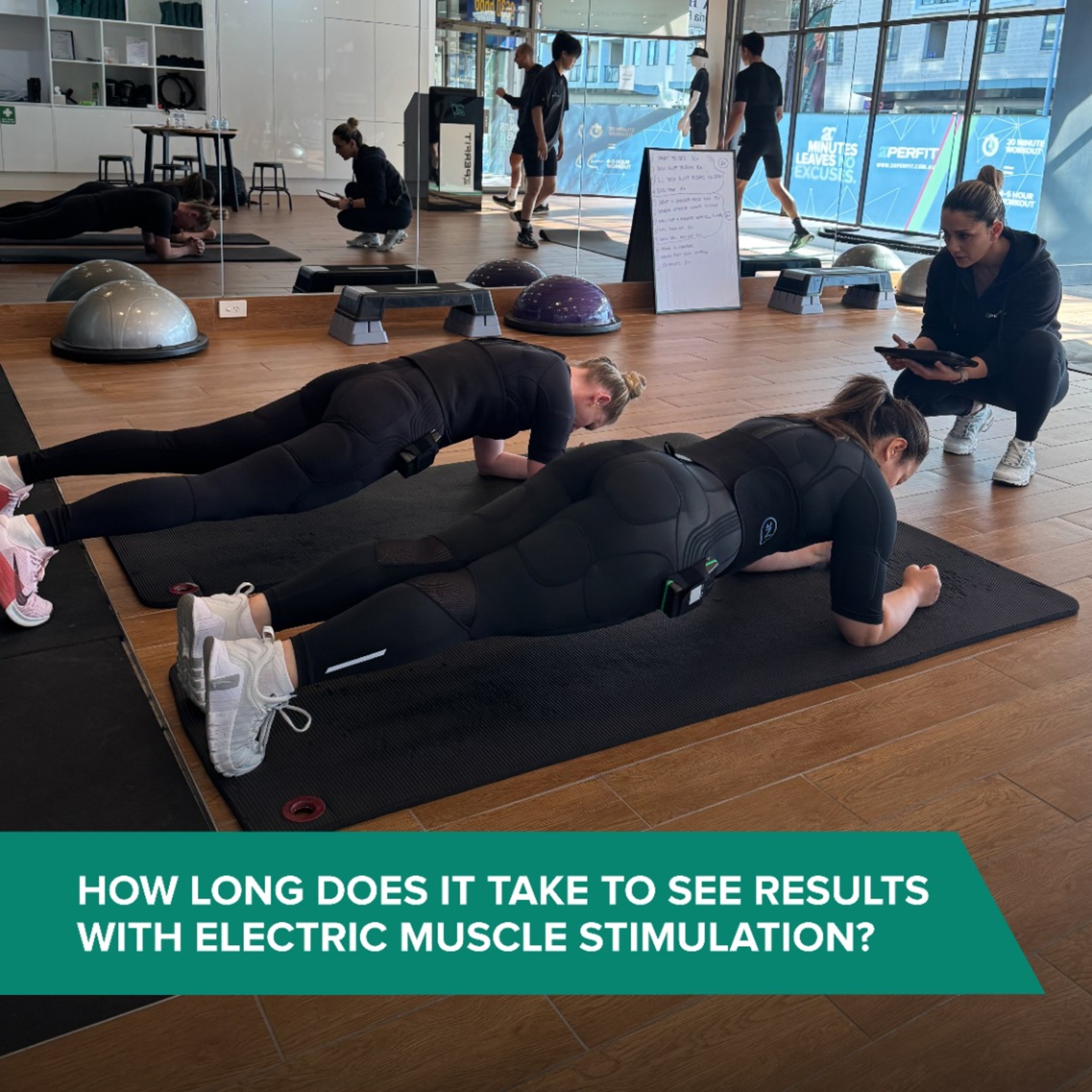
So what actually happens during a session? You put on what looks a bit like a fitted wetsuit – except it’s embedded with electrodes positioned over your major muscle groups. Once the session starts, those electrodes send low-level electrical impulses into your muscles, causing them to contract. And not just a gentle contraction – the kind that reaches deep into the muscle fibres that most conventional exercises never fully engage. At the same time, you’re actually moving. Squatting, lunging, pressing, bracing. The electrical stimulation amplifies the work your muscles are already doing, which is why the whole thing can be so remarkably intense in such a short time.
That’s the basic idea. No magic. Just physiology.
Why Results Aren’t the Same for Everyone
Look, it’d be easy to just say “EMS works” and leave it there. But the more honest answer is that it works differently depending on a bunch of factors – some of which are within your control, and some of which just come down to individual biology.
The intensity setting is a big one. Higher electrical impulse intensity means more muscle fibres get recruited during each contraction, which generally translates to better results. But you can’t just start at maximum intensity – your body needs time to get used to the stimulus, and a trainer worth their salt will increase things gradually as your tolerance builds. Trying to fast-track that process is how people end up either injured or so sore they can’t move for three days.
Then there’s whether you’re actually moving during the session. This trips some people up. EMS isn’t a passive treatment where you lie down and let the machine do everything – that kind of passive stimulation has its place in rehab settings, but it’s not what produces the results people are after in a fitness context. Actively moving through exercises while the stimulation is running is what makes the whole thing work. The suit amplifies your effort; it doesn’t replace it.
Consistency matters enormously. Probably more than people want to hear. One or two sessions a week is the standard recommendation – not because more wouldn’t do anything, but because EMS is genuinely demanding on your neuromuscular system and your body needs recovery time between sessions. Showing up irregularly, trying it for two weeks and then stopping, or treating it like something you do when you remember – none of that is going to produce meaningful change. It rarely does with any training method, and EMS is no exception.
And then there’s everything outside the suit. Sleep. Food. Stress. How well you’re actually recovering. None of these are EMS-specific – they’re just the fundamentals of any training program working or not working. EMS can be incredibly effective, but it can’t compensate for genuinely poor lifestyle habits.
When Do Things Start Happening?
This is almost always the first question, and the honest answer is: sooner than you might think, but not overnight.
Because EMS reaches deeper muscle fibres than most people manage to engage through standard gym training, the body responds to it as a new and significant stimulus. That’s why it’s completely normal to feel noticeably – sometimes surprisingly – sore in the 24 to 48 hours after your first session. Not injured-sore. Just the kind of soreness that tells you muscles were genuinely worked. If you wake up the morning after your first EMS session and feel muscles you’d basically forgotten you had, that’s a good sign.
In terms of visible changes – muscle tone, body composition, strength – most people start noticing something meaningful around the four to six week mark with consistent training. That’s not a fixed rule. Some people respond faster, some slower. Your starting fitness level, how well you eat and sleep, and how consistently you train all push that timeline around. But four to six weeks of regular sessions is a reasonable expectation for when things start to feel and look genuinely different.
The Muscle Building Side of Things
Here’s something that doesn’t get explained clearly enough in most EMS content: the reason it builds muscle effectively isn’t just because it makes your muscles work harder. It’s because it makes muscles work in ways that conventional training often can’t reach.
Most people, even experienced gym-goers, have muscle fibres they’ve never meaningfully activated. Not through any fault of their own – it’s just the nature of how voluntary muscle recruitment works. Your nervous system takes the path of least resistance, which means the same muscle fibres get used over and over while others stay largely dormant.
Electrical stimulation bypasses that. The impulses reach into the deeper layers, recruiting fibres that don’t typically get called up during a standard workout. That’s actually why the technology was first developed for rehabilitation – patients recovering from injury or surgery often lose function in specific muscle groups, and EMS gave physiotherapists a way to stimulate those muscles even when the patient couldn’t voluntarily activate them properly. Over time, the same principle got applied to performance and general fitness.
The result is a training stimulus that’s genuinely different from what most people’s bodies are used to – and different stimuli, applied consistently over time, produce change.
Fat Loss – What’s Realistic
EMS isn’t primarily marketed as a fat loss tool, but the fat loss benefits are real and worth understanding properly.
When large muscle groups contract simultaneously – which is essentially what happens across your entire body during an EMS session – your metabolic rate climbs. You’re burning more energy than you would during a comparatively low-intensity conventional workout, and that elevated metabolic activity can continue for a period after the session ends as your body works to repair and recover.
Building more lean muscle through consistent training also increases your resting metabolic rate over time. Muscle tissue burns more calories than fat tissue even at rest, so gradually adding muscle mass means your body becomes more metabolically active in general – not just during workouts.
But – and this is worth saying directly – no training method burns off a bad diet. EMS included. If the goal is meaningful fat loss, what you eat still matters more than how you train. When EMS training is combined with sensible nutrition and decent recovery habits, the results can be noticeably faster than lower-intensity alternatives. Without those foundations, it’ll help, but only so much.
Making the Sessions Actually Count
A few things genuinely separate people who get strong results from those who feel like EMS didn’t really do much for them.
Moving during stimulation – properly, with intention – is probably the biggest one. Squats, lunges, core holds, upper body presses – whatever the session involves, actually doing those movements well during the stimulation is what drives results. The suit amplifies your effort; if the effort isn’t there, there’s less to amplify.
Training frequency matters, but recovery matters equally. Once or twice a week consistently, over months, beats three sessions crammed into one week followed by two weeks off. Your body adapts to repeated, well-timed stimuli over time. That’s just how training works.
Working with a qualified trainer isn’t optional if you want to do this properly. Electrode placement, intensity calibration, exercise selection – these all have a meaningful impact on what a session actually achieves, and getting them wrong doesn’t just reduce effectiveness, it can make the whole thing feel pointless. A good trainer takes the guesswork out of it and adjusts things based on how your body is responding.
Tracking Progress Without Losing Your Mind Over It
One of the things people underestimate about EMS – or any body composition-focused training, really – is how misleading some progress markers can be, particularly early on.
The scale is the obvious one. If you’re building muscle and losing fat at the same time (which EMS is well-suited to supporting), your weight might barely move even while your body is changing quite noticeably. Muscle is denser than fat, so the swap doesn’t always show up in kilograms the way people expect. This is frustrating if the number on the scale is your primary benchmark, and it’s why most people who’ve done this seriously end up mostly ignoring it.
Photos and measurements – waist, hips, thighs, arms – are far more telling. Taken consistently (same lighting, same time of day, same poses), before-and-after photos pick up on changes that are genuinely hard to see day-to-day. Clothes are another surprisingly reliable indicator. If things that were snug are fitting differently, something is working, regardless of what any number says.
Pay attention to what’s happening within sessions too. Can you handle higher intensity than you could a month ago? Are you recovering more quickly between sessions? Moving through exercises with better control? These internal markers of adaptation matter – they’re signs that your neuromuscular system is developing, which is the foundation everything else is built on.
A Word on Safety – Because It Matters
EMS is safe for most healthy adults. But “most” is doing some work in that sentence, and it’s worth being clear about the exceptions.
Before your first session anywhere reputable, you’ll fill out a pre-screening form. This is the part where people are sometimes tempted to rush through or underplay certain things – don’t. The screening exists to identify conditions that make EMS genuinely risky: heart conditions, epilepsy, pregnancy, active infections, metal implants, and certain recent injuries or surgeries all fall into that category. The electrical impulses that make EMS effective are also the reason it’s contraindicated for certain medical situations. It’s not something to push past without proper guidance.
For people who are cleared to train – which is the majority – the main safety considerations are pretty straightforward. Progress intensity gradually. Don’t skip recovery time between sessions. Train under proper supervision, especially in the early stages. And pay attention to your body. There’s normal workout discomfort and then there’s something-feels-wrong discomfort, and it’s worth knowing the difference. The former is part of training; the latter is always a reason to stop and check in.
When those basics are respected, EMS is a genuinely effective, low-injury-risk training method. The people who have problems with it are almost always the ones who tried to do too much too fast or trained without proper guidance.