The Science Behind Electric Muscle Stimulation
25 March, 2026
First, What Even Is EMS?
If you’ve never come across Electric Muscle Stimulation before, the concept can sound a little strange at first. Electrical impulses? A suit with electrodes? It sounds like something from a sports science lab rather than a fitness studio. But once you understand the basic mechanism, it actually makes a lot of sens
Here’s the short version: your nervous system sends electrical signals to your muscles every time you move. That’s how voluntary movement works – your brain tells your muscles to contract, and they do. EMS essentially mimics that process from the outside. Small, controlled electrical impulses are delivered through electrodes placed directly over your major muscle groups, triggering contractions that happen alongside whatever movement you’re already making. An EMS workout essentially turns that process into a full training session – and a surprisingly intense one at that.
The result is that more muscle fibres get activated during each exercise than would normally be recruited through voluntary effort alone. And more fibre recruitment, all else being equal, means a more intense training stimulus in a shorter amount of time.
It’s worth knowing that none of this is new or experimental. EMS has been used in physiotherapy and rehabilitation settings for a long time – helping patients recover from surgery, manage chronic pain, rebuild lost muscle function. The fitness application is a more recent development, but it’s built on a foundation of well-established science.
How It Actually Works in Practice
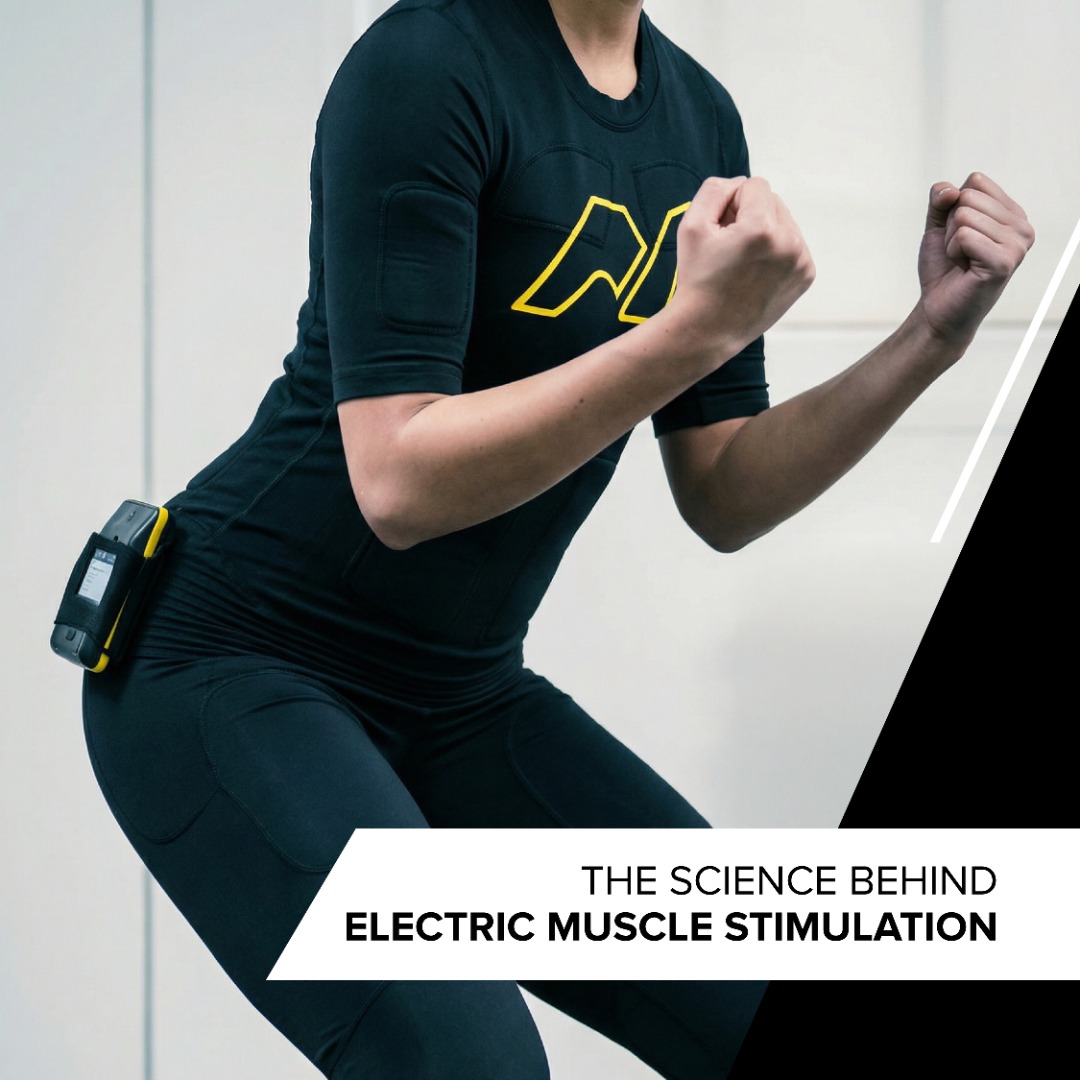
During an EMS session – particularly in a fitness context – you wear a specialised suit fitted with electrodes that sit over the main muscle groups of your body. The suit connects to a device that delivers low-frequency electrical currents, and a trainer controls the intensity and pattern of stimulation throughout the session.
What makes the setup interesting is the level of control it allows. By adjusting frequency and intensity, a trainer or therapist can target very different outcomes. Lower, gentler stimulation can improve circulation and promote recovery. Stronger, higher-intensity settings are what drive muscle strengthening and the kind of intense training effect that EMS fitness sessions are designed around.
In clinical settings, EMS therapy uses the same underlying technology for things like preventing muscle atrophy in patients who can’t exercise conventionally, supporting recovery after neurological events, and managing certain types of chronic pain. There’s also a more specialised application called Functional Electrical Muscle Stimulation, which stimulates muscle groups in coordinated sequences – this is particularly useful for people with impaired motor function who are working to restore movement and stability.
The fitness version is simpler but draws on the same physiological principles. You move, the suit amplifies the muscular effort involved in that movement, and the combination produces results that would take considerably longer to achieve through conventional exercise alone.
What’s Actually Happening Inside Your Body During EMS
This is the part that tends to surprise people – not just that EMS works, but why it works. There are several distinct physiological effects happening during a session, and understanding them helps explain why the results can be as significant as they often are.
More muscle fibres get involved than usual. This is probably the most important one. During conventional exercise, your nervous system recruits muscle fibres somewhat selectively – it tends to use the same fibres repeatedly while others, particularly deeper ones, stay largely dormant. This is where muscle stimulation therapy like EMS changes everything-it bypasses that selectivity. The electrical impulses reach into the deeper layers of muscle tissue, activating fibres that normal voluntary movement often doesn’t touch. That’s a genuinely different training stimulus, and it’s why a 20-minute EMS session can be so demanding despite the relatively short duration.
Blood flow improves. The repeated contractions that EMS produces act almost like a pumping mechanism within the muscles themselves. This pushes blood through the tissue more effectively, bringing oxygen and nutrients in while clearing out metabolic waste. Better local circulation supports recovery, reduces soreness over time, and contributes to general tissue health.
Muscle function gets maintained – or restored. In rehabilitation contexts, this is often the primary goal. When someone has been immobilised after surgery or injury, the affected muscles can weaken and atrophy quickly. EMS gives therapists a way to keep stimulating those muscles even when the patient can’t voluntarily activate them properly. Over time, this helps re-establish the neural pathways between the nervous system and the muscle – which is often where a lot of the real work in recovery happens.
Strength improves. This applies to both rehabilitation patients and healthy individuals training for performance or general fitness. When EMS is used consistently alongside active movement, the combination of enhanced muscle activation over multiple sessions leads to measurable improvements in strength, tone, and muscle definition. It’s not magic – it’s just more effective stimulation applied more consistently than most people manage through conventional training.
Metabolism gets a boost. Muscle tissue requires energy to contract, and when multiple large muscle groups are contracting simultaneously during an EMS session, your body’s energy demand climbs noticeably. Sustained over time, this elevated muscular activity can support improvements in metabolic rate – which, combined with sensible eating, contributes meaningfully to fat loss and body composition goals.
EMS and Building Muscle – What’s Actually Going On
The muscle-building case for EMS comes down to one core idea: during a session, both voluntary and electrically-stimulated contractions are happening at the same time, and that combination engages far more muscle fibres than most people ever achieve through standard training.
Think about it from a stimulus-response perspective. Your muscles adapt to the demands placed on them. If those demands are consistently higher than what conventional training produces – more fibres activated, deeper tissue engaged, more total work done per unit of time – then the adaptive response is correspondingly stronger. That’s why people who train with EMS consistently tend to see improvements in muscle strength, tone, and endurance that outpace what they were getting from conventional methods.
In rehabilitation, the same principle works in reverse. When muscles have weakened through disuse – post-surgery, after injury, or due to neurological conditions – EMS stimulates those muscles directly, preventing further atrophy and gradually rebuilding the strength and coordination that’s been lost.
EMS and Fat Loss – The Honest Picture
Fat loss from EMS is real, but it works through mechanisms that are worth understanding properly rather than just accepting on faith.
During a session, the simultaneous contraction of multiple large muscle groups increases calorie burn significantly. More muscle activation equals more energy expenditure – it’s a fairly direct relationship. And because EMS recruits more muscle fibres than most conventional workouts, the energy demand per session is higher than many people expect.
Over time, the muscle mass gained through consistent EMS training also increases resting metabolic rate. Muscle tissue burns more calories at rest than fat tissue does, so gradually building more of it means your body becomes more metabolically efficient over time – not just in the hours after a session, but continuously.
That said – and this is worth being direct about – no training method operates in isolation. Fat loss ultimately comes down to energy balance, and what you eat matters enormously. EMS can meaningfully accelerate the process and make your training time far more efficient, but it works best when it’s part of a broader approach that includes proper nutrition and adequate recovery.
What the Research Actually Shows
EMS has been studied fairly extensively, across a range of populations – sedentary adults, seniors, rehabilitation patients, recreational gym-goers, and elite athletes. The findings are generally positive, and a couple of studies are worth looking at specifically.
A 2003 multicentre study followed 34 participants through a six-week Functional EMS training program. The results were notable across several measures. More than 82% of participants reported a reduction in back pain, with nearly 30% becoming completely symptom-free. Women in the study saw improvements in incontinence symptoms at a rate of around 76%. Maximum strength increased by just over 12%, muscular endurance improved by a substantial 69%, and relative body fat dropped by 1.4% in the training group. Participants also reported measurable reductions in body circumference across the waist, hips, thighs, and chest – and many noted broader improvements in energy, mood, perceived stability, and general wellbeing.
A separate study from 2016, published in the Journal of Sports Science and Medicine, looked at what happened when elite soccer players incorporated a 14-week whole-body Functional EMS program into their training. The results showed significant improvements in leg strength, sprint speed, and vertical jump performance – improvements that exceeded those seen in a comparison group who performed standard jump training without EMS.
Neither of these studies is cherry-picked – they reflect a broader pattern in the research literature of EMS producing measurable, meaningful results across quite different populations and goals.
Is It Safe? Yes, With Some Important Qualifications
For the vast majority of healthy adults, EMS is safe when used correctly and under proper supervision. The electrical impulses involved are low-frequency and controlled, designed to stimulate muscle tissue without affecting surrounding structures.
The supervision part matters more than it might seem. A certified trainer should be adjusting intensity and stimulation patterns based on how you’re responding – not just running a fixed program regardless of how you feel on a given day. This is especially important in the early sessions when your body is getting used to the stimulus.
There are certain situations where EMS isn’t appropriate without specific medical clearance – or isn’t appropriate at all. People with pacemakers or other implanted electrical devices, those who are pregnant, and individuals with epilepsy or certain neurological conditions should either avoid EMS or consult their doctor before considering it. These aren’t minor caveats – the same electrical properties that make EMS effective can create real risks in these specific situations.
For everyone else, when used sensibly, the risk profile is low and the potential benefits are well-documented.
Where the Technology Is Heading
EMS as a technology hasn’t stood still. The systems being used today are considerably more sophisticated than what was available even a decade ago – wireless electrodes, smart suits that adjust stimulation in real time, digital control interfaces that give trainers precise control over every parameter of a session.
Where things seem to be heading is toward even greater personalisation. Researchers and developers are working on integrating artificial intelligence and biometric monitoring into EMS systems – devices that can read your muscle response and fatigue levels in real time and automatically adjust the stimulation accordingly. The idea is to take the guesswork out of intensity calibration entirely and let the system optimise the session as it goes.
Beyond fitness, the longer-term applications look genuinely interesting. Preventative healthcare, age-related muscle loss, injury recovery, neurological rehabilitation – EMS is increasingly being discussed in all of these contexts as a complement to existing treatments rather than just a fitness novelty. Whether all of that potential gets fully realised depends on continued research and clinical adoption, but the direction of travel seems fairly clear.